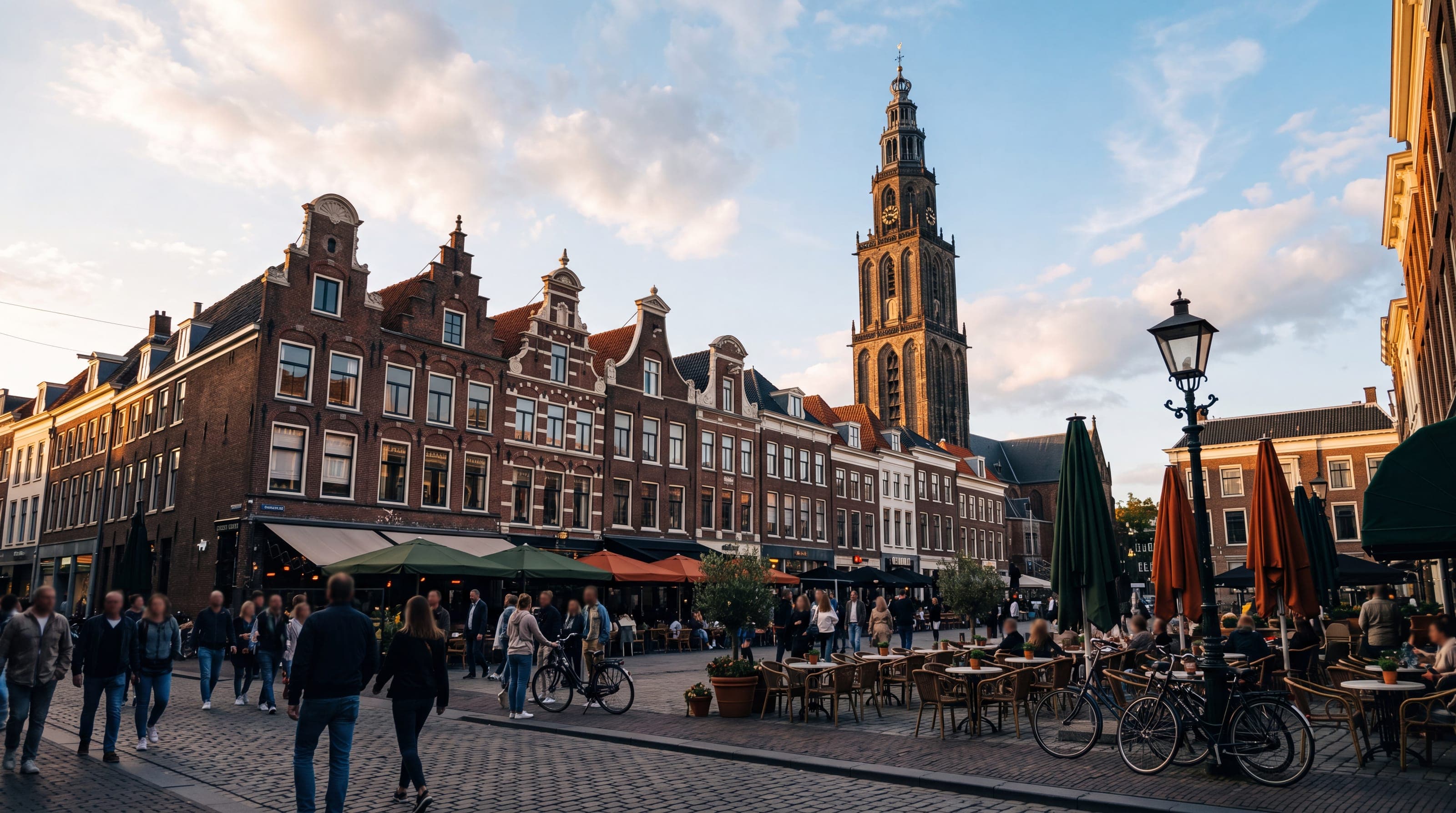
Groningen is a strong second-trip city: young, bike-heavy, handsome and far enough north to feel like a deliberate discovery.
Groningen is closer than most visitors assume, cheap to reach by train, and easy to do without a car. Here is what actually deserves your hours.
How to get to Groningen from Amsterdam and Schiphol
Take the direct Intercity from Amsterdam Centraal. No transfer, trains all day, fastest runs around 2 hours 4 minutes and most around 2 hours 19 minutes; check NS for current fares.
That kills the most common excuse. "Too far" is wrong; the real mistake is day-tripping a city that rewards an overnight, which we get to below.
The station sits a 5 to 15 minute walk from the center, and the Groninger Museum is directly opposite it, visible from the platforms. It makes a natural first or last stop.
Ignore Groningen Airport Eelde for planning purposes; it is small and its route network changes often. The train is the answer. For tickets and OV basics, see How to travel the Netherlands by train.
Best time to visit Groningen
May through September is the terrace-and-cycling window. September specifically brings the full student-city energy back.
Two fixed anchors: Eurosonic Noorderslag, the music festival in January, and Noorderzon, the performing-arts festival in August. Dates shift each year, so check before you commit.
Mid-August is the wildcard. KEI-week, the university's introduction week, fills the city with students and parties (dates vary; check keiweek.nl), with an ESN intro week following into early September. Great if you want that energy; a trap if you don't, with scarce rooms and a loud center.
One expectation to set now: most cafes open around 10:00, so do not plan on an early cafe breakfast.
Little else needs booking ahead. Reserve accommodation early for KEI-week and festival dates; otherwise Groningen is a low-reservation city.
Where to stay, and why an overnight beats a day trip
Locals are consistent: stay the night. The payoff is a nightlife scene with no legal closing time, which you only experience if you are not watching the clock for a last train.
The center is compact, and anywhere inside the diepenring, the canal ring, puts everything on foot.
Two anchors worth knowing. The Social Hub (formerly The Student Hotel, so search both names) covers modern budget-to-mid rooms. Prinsenhof, a former hofje turned five-star hotel with a private garden, is the treat option.
Book well ahead if your dates land on KEI-week. For how Groningen fits a wider trip's basing decisions, see Where to stay in the Netherlands on a first trip.
Getting around: a city built for bikes
Everything is reachable on foot or by bike. Rental shops are everywhere, and this is the most bike-dense city in the Netherlands, engineered around cyclists rather than cars.
The classic visitor error is standing or drifting into a bike lane. If you ride, ride steadily and predictably; hesitant swerving is what marks tourists out and puts them at risk. Our etiquette essential covers Dutch street conduct.
A realistic day starts late; the cafe hours see to that. Coffee, then the Groninger Museum or the Martinitoren climb, a hofjes and Folkingestraat wander with an eierbal stop, an afternoon in the Noorderplantsoen or Prinsentuin, dinner, then Poelestraat for as long as you like.
What to do: tower, Forum, museum and hidden hofjes
The Martinitoren, called d'Olle Grieze (the Old Grey One), has watched the city for over 500 years. The climb is almost 300 stone steps up a steep, narrow spiral staircase with no lift, and most visitors spend over an hour inside. Entry costs a few euros, card reader at the gate; on clear days the view stretches into the countryside.
Forum Groningen is the free-to-cheap counterpoint: the city's cultural living room, with a library, cinema and exhibition spaces. The escalator ride up is an experience on its own, and from the rooftop terrace at 45 meters you can spot the Wadden island Schiermonnikoog on a clear day. The tourist office, the Groningen Store, sits inside at Nieuwe Markt 1.
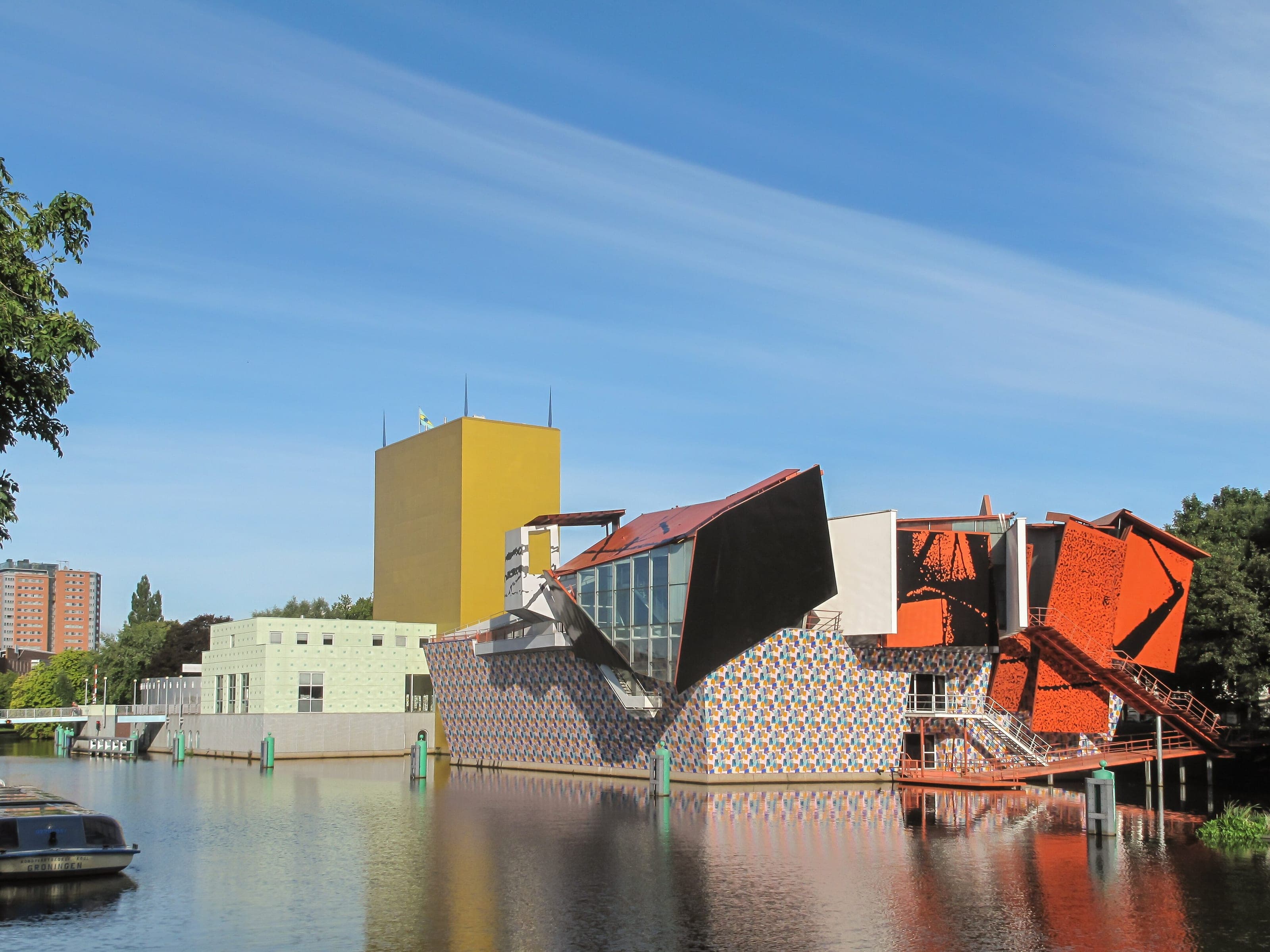
The Groninger Museum is worth your time before you even enter; Mendini's postmodern pavilions are a work of art in themselves. The real draw is the changing blockbuster shows (the David Bowie exhibition remains the famous example), so check what's on rather than expecting a fixed collection.
Then the hofjes, the historic almshouse courtyards: Sint Anthony Gasthuis, Pepergasthuis and the Rode of Burgerweeshuis. Usually open during the day, sometimes simply shut. That is part of the charm.
For green space, match the park to your mood. Noorderplantsoen, built on the old defensive walls, is where the city lounges. The walled Prinsentuin with its tearoom is the quiet option. The Suikertuin, a garden terrace on the former sugar factory site, is a 10-minute bike ride out.
What to eat: the eierbal and other northern specialities
Start with the eierbal, locally the aaierbal: a hard-boiled egg wrapped in ragout, breaded and deep-fried, officially recognized intangible cultural heritage. Ordering one is the local litmus test; do not confuse it with a bitterbal.
Where to try it: Cafetaria Koning on the Bedumerweg works a decades-old family recipe, Friet van Piet in the Oosterpoort does a spicy "Feierbal", the De Belg Waterloo stall sits on the Vismarkt by the Grote Markt, and Frietwinkel on Folkingestraat lands conveniently on the station-to-center walk. Restaurant Niemeijer serves a refined version with a soft-boiled egg, vadouvan and honey from its own hives; De Drie Gezusters does a mini quail-egg one as a novelty.
The wider regional table is worth exploring too: mosterdsoep, Groninger koek, poffert, boerenjongens and spekdikken.
For dinner, a shortlist locals rate rather than a directory: Pernikkel, Buurman & Buurman, El Santo, Konbu Streetfood, and Wadapartja on the Zuiderdiep, where dishes are named after Groningen things.
Nightlife with no closing time
The headline fact: Groningen has no mandatory closing times for hospitality. Bars can legally stay open all night, and this is the payoff for staying over.
The core strips are Poelestraat and Peperstraat. The mega-pubs on the Grote Markt, De Drie Gezusters among them, are the obvious tourist and student funnel; the brown cafes and Poelestraat side streets reward you more. Try Cafe de Toeter, or the after-work favorite De Uurwerker.
When the night ends, snack bars like De Hoek (Snack Corner, Grote Markt 34) stay open all night for the refuel.
September and the intro weeks change the crowd entirely, so pick your dates accordingly. Late-night basics are in our safety essential.
Day trips: seals at Lauwersoog, Garnwerd by bike and the Lauwersmeer
First, a correction many guidebooks still get wrong. The seal rescue centre left Pieterburen in 2025 and now operates from the Wadden Sea World Heritage Centre at Lauwersoog harbour, where seal-spotting boat trips also depart. Do not go to Pieterburen for seals; it remains the start of the Pieterpad long-distance trail, nothing more.
For a half-day by bike, ride the Garnwerd loop: about 15 kilometers, roughly 45 minutes out along the Reitdiep Jaagpad through one of Europe's oldest cultural landscapes. Stop at Garnwerd aan Zee or Cafe Bij Hammingh, look for what is claimed as the narrowest street in the Netherlands, and return via Adorp.
Lauwersmeer National Park works car-free. Bus 163 runs hourly from Groningen station, 50 minutes to the fishing village of Zoutkamp (eel smokehouse Palingrokerij Postma); a 15-minute walk then brings you to the Jaap Deensgat birdwatching hut, with white-tailed eagles a real possibility.
The ambitious option is Westerwolde, about five hours door to door: train 33 minutes to Winschoten, bus 14 to Albert Wubsweg, then a signed walk of around 2 hours 15 minutes from the Weddermeer to Smeerling, finishing at Gasterij Natuurlijk Smeerling.
Every route above is car-free. The north works fine on rail, bus and bike.
Where to go next: pairing Groningen with the rest of the north
The natural onward moves are Leeuwarden by direct regional train and Schiermonnikoog via the Lauwersoog ferry, both squarely in slow-northern-travel territory.
For a wider loop, add Giethoorn on the way south, then finish in Amsterdam on the direct Intercity or reach Utrecht by train.
Groningen is also the add-on that turns a classic route into a second trip. If you are working from 10 days in the classic Netherlands, a two-night Groningen extension slots in at the northern end.
One last practical note: your train home originates here. Arrive 10 to 15 minutes early and the seat is yours.
- Netherlands entry requirements in 2026A practical, date-aware guide to passports, 90/180-day rules, EES border checks and ETIAS timing for Netherlands visitors.
- Is the I Amsterdam City Card worth it?The city card can be excellent value, but only for active plans. This guide shows when to buy it and when to skip it.
- How to travel the Netherlands by trainThe Netherlands is rail-friendly, but visitors still need help choosing between contactless payment, day tickets and regional passes.
Top things to do in Groningen
Hand-picked experiences in Groningen
The places, experiences and stays our editors return to in Groningen.
Map
Map of Groningen
Pinned listings on the map. Tap a pin to open.
More in Groningen